Raccontato al suo livello
Mantenga tutte le formule, oppure nessuna. È lei a scegliere quanto approfondire.
Carichi un manuale o un libro difficile. Lo riceverà spiegato al suo livello, letto ad alta voce, con un disegno per ogni idea.
Trascini qui il suo libro
EPUB, FB2, PDF, DjVu o TXT, fino a 200 MB
Il suo file resta privato
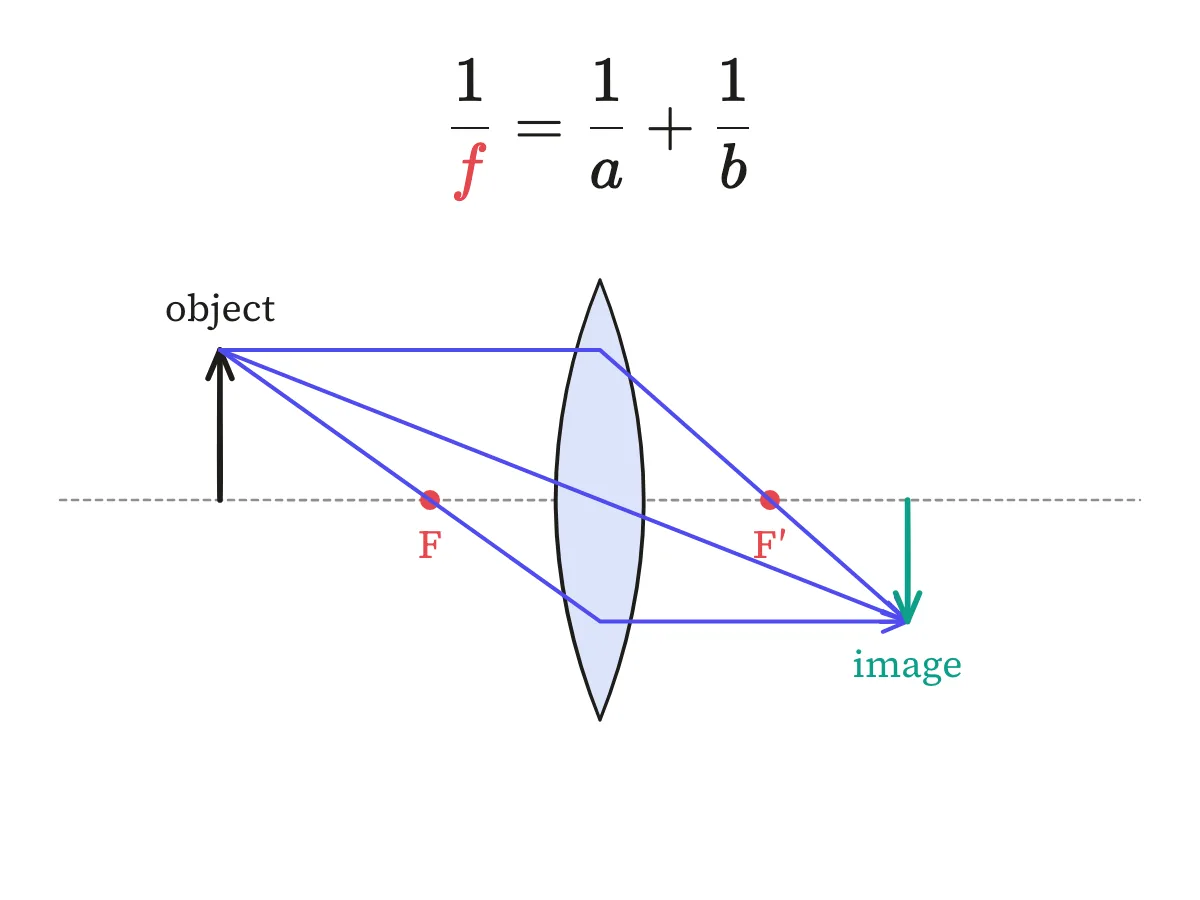
La distanza focale f′ di un sistema è la distanza dal suo piano principale posteriore H′ al fuoco posteriore F′. Per una lente sottile in aria è determinata dai raggi di curvatura r₁, r₂ delle sue superfici e dall’indice di rifrazione n del vetro: 1/f′ = (n − 1)(1/r₁ − 1/r₂).
A lens is stronger when its glass is denser and its surfaces are more curved. Take ordinary glass, in which light travels one and a half times slower than in air, and curve both sides like a ball twenty centimetres across. Work it through and the focal length comes out at about ten centimetres: sunlight gathers into a point a palm's width behind the lens.
Mantenga tutte le formule, oppure nessuna. È lei a scegliere quanto approfondire.
Il suo dispositivo legge ogni lezione ad alta voce, gratis. La frase in lettura è evidenziata nel testo.
Schemi e grafici prendono forma passo dopo passo, al ritmo della voce.
Indichi con cosa lavora: gli esempi useranno i suoi strumenti, non quelli di altri.
The same hard book is a different problem for a student before an exam and for an engineer on a deadline. Pick yours.
The textbook the course is built on, at a level you can follow tonight.
See howThe reference book of your field, at the depth today’s task needs.
See howRead into the neighbouring field without losing a month to its textbook.
See howSee a hard chapter explained five ways before you explain it yourself.
See howThe great hard books you always meant to read, finally followed to the end.
See howLo stesso paragrafo a cinque livelli. Prima di generare i contenuti, sceglie il livello su un paragrafo del suo libro.
Formule raccontate a parole, con un esempio svolto.
Una lente è più potente quando il suo vetro è più denso e le sue superfici sono più curve. Prendiamo un vetro comune, in cui la luce viaggia una volta e mezza più lentamente che nell’aria, e curviamo entrambi i lati come una sfera di venti centimetri di diametro. Facendo i conti, la distanza focale risulta di circa dieci centimetri: la luce del sole si concentra in un punto a un palmo di distanza dietro la lente.
Un paragrafo di esempio. Il suo sarà tratto dal suo libro.
Add questions after each part, worked examples and a pointer back to the page. Each is optional. Try them here.
Question 1 of 3
You swap a lens for one of the same shape made of denser glass. What happens to the point where sunlight gathers?
Ordinary glass, in which light travels one and a half times slower than in air. Both sides are curved like a ball twenty centimetres across. How far behind the lens does sunlight gather?
The same glass, but now one side is flat and only the other is curved. Where does the light gather?
Chapter 2. The thin lens · pages 41–44
Starts at: «The focal length f′ of a system is the distance from its rear principal plane H′ to the rear focal point F′…»
Every part says which chapter and pages of your book it retells. Cite the book, not the retelling, and open the original where it matters.
An example. Yours are written from your own book, and a second model answers every question before you see it. Available in the player
Five hard passages, five styles, every drawing made by our stage. Pick one style and every scene of the book follows it.
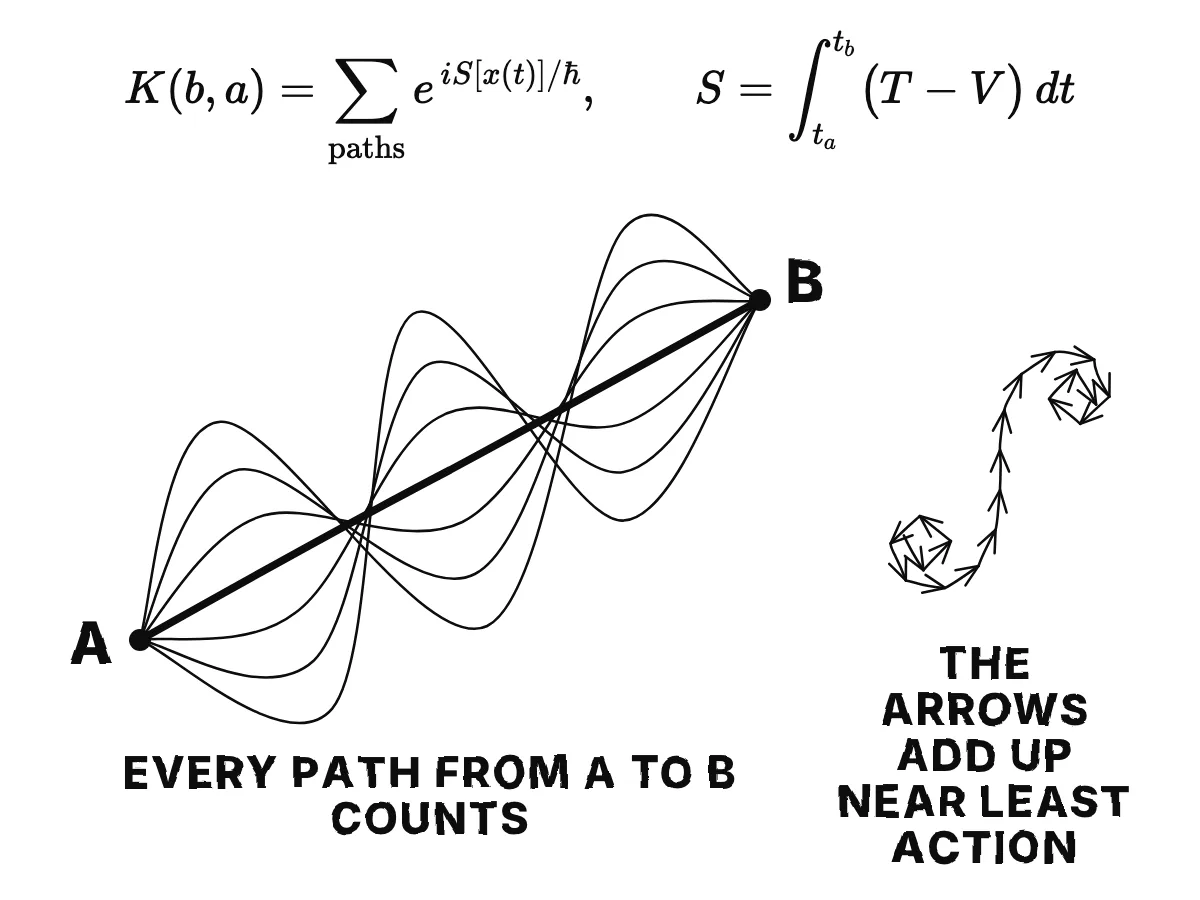
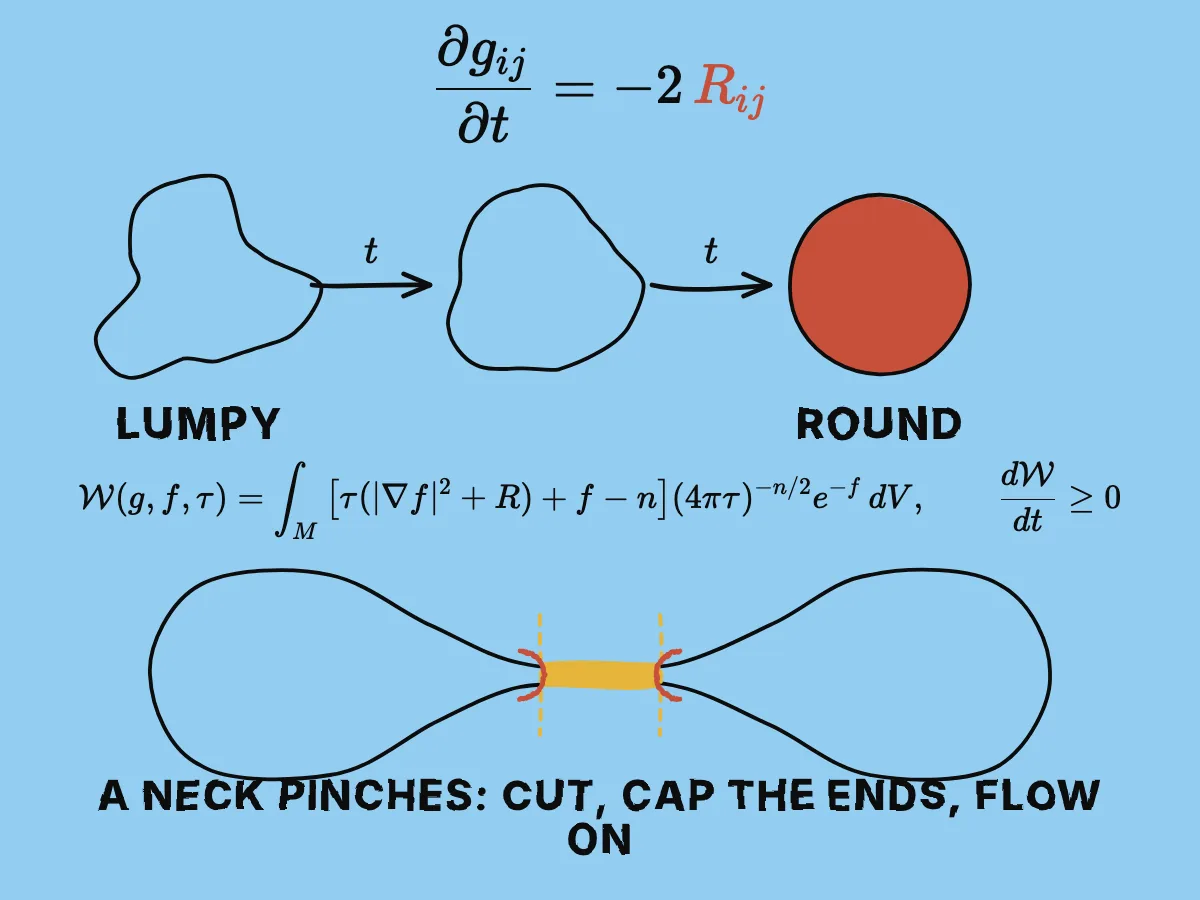
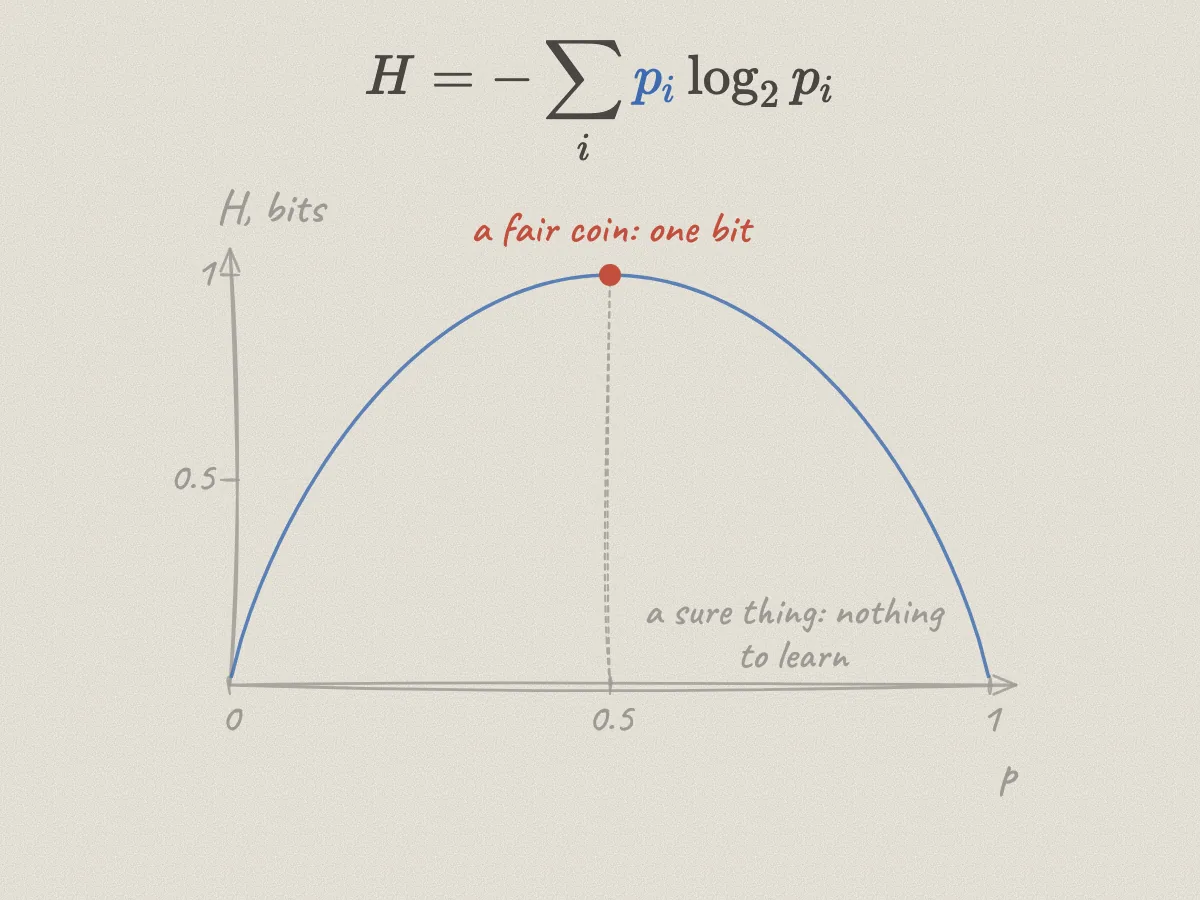
Voce, disegni e testo in qualsiasi combinazione. Può cambiare quando vuole.
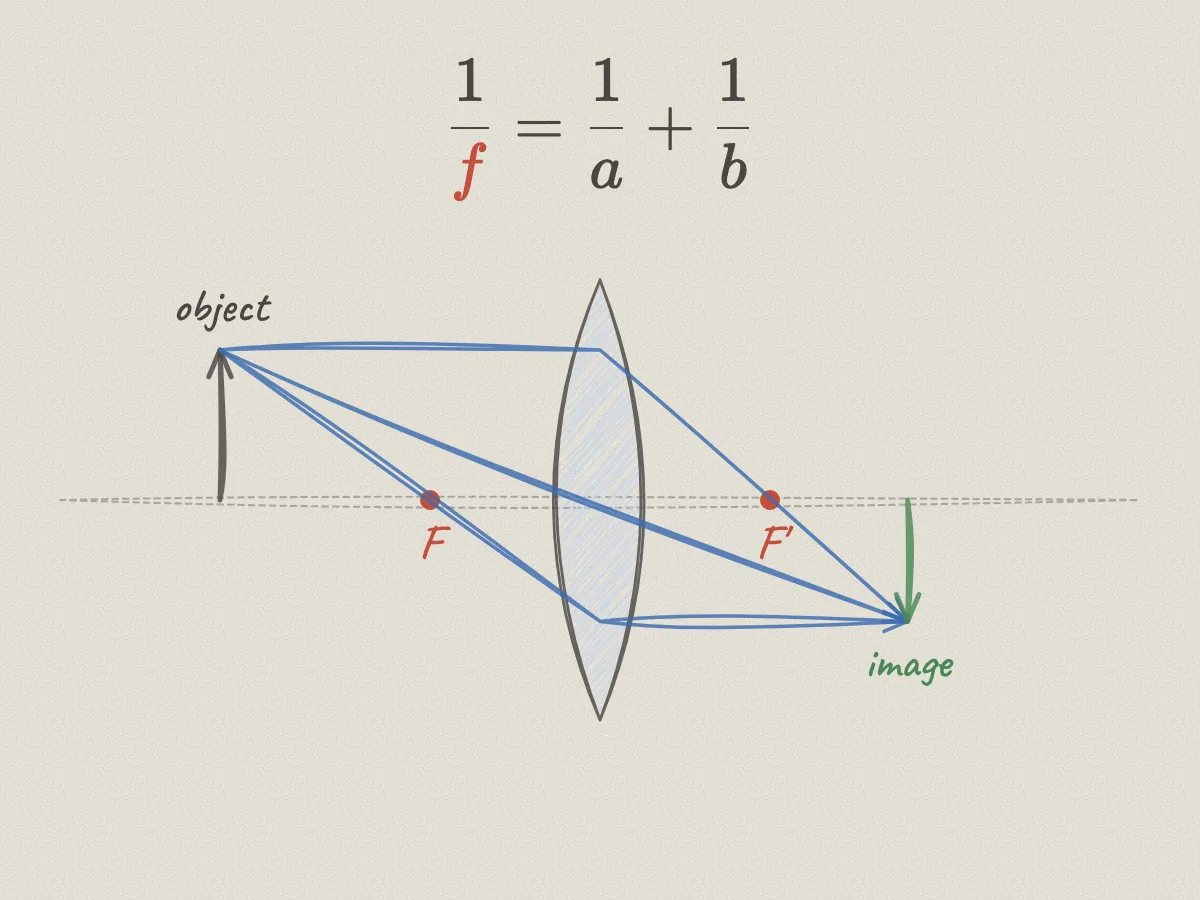
The first thing to know about a lens is how hard it bends light. Hold a magnifying glass in the sun: the rays arrive side by side, leave it leaning towards one another, and a little way behind the glass they meet in a bright dot. The distance from the glass to that dot is the focal length, and nearly everything else about the lens follows from it.
A lens is stronger when its glass is denser and its surfaces are more curved. Take ordinary glass, in which light travels one and a half times slower than in air, and curve both sides like a ball twenty centimetres across. Work it through and the focal length comes out at about ten centimetres: sunlight gathers into a point a palm's width behind the lens.
The book writes this as a formula, and we will come to it in a moment. It says no more than what we have just seen: denser glass or more curved surfaces, and the focal length gets shorter.
The distance from the glass to that dot is the focal length, and nearly everything else about the lens follows from it.
A lens is stronger when its glass is denser and its surfaces are more curved.
Il disegno sulla pagina sinistra, il testo sulla destra, la frase in lettura ben evidenziata.
Il disegno in alto e la frase corrente sotto. Oppure solo la voce, durante una passeggiata.
Da portare con sé: MP3, MP4, EPUB, FB2, PDF.
EPUB, FB2, PDF o DjVu. Il testo delle pagine scansionate viene riconosciuto.
Livello, lingua, stile del docente, stile dei disegni, voce, esempi su misura.
Le prime dieci pagine, complete di voce e disegni.
Tutto il libro o le prime cento pagine. Vedrà il prezzo prima che venga generato qualsiasi contenuto.
L’anteprima è gratuita. Poi il prezzo dipende dalla quantità di testo rielaborato e dal numero di disegni generati, ed è visibile prima di iniziare. Ascoltare con la voce del dispositivo non costa nulla; la narrazione da studio è un extra. Ricarichi il saldo e lo usi libro per libro.
Carichi un libroManuali, testi scientifici e tecnici e qualsiasi saggio impegnativo: filosofia, economia, storia. Le formule sono benvenute.
EPUB, FB2, PDF, DjVu e testo semplice. I libri scansionati passano attraverso il riconoscimento del testo.
Le lezioni possono essere in molte lingue, e un libro in una lingua può essere raccontato in un’altra.
Sì. I file caricati e le lezioni sono visibili solo a lei. Se vuole, può condividere una lezione tramite link.
Ogni libro viene salvato come sessione. Può tornare quando vuole per cambiare le impostazioni, proseguire nel libro o aggiungere un formato da scaricare.
Al primo livello, sì: il libro viene letto così com’è scritto. Negli altri livelli viene raccontato con parole nuove, mantenendo l’ordine, le conclusioni e i risultati.