Explicado ao seu nível
Mantenha todas as fórmulas, ou nenhuma. Escolha o grau de profundidade.
Carregue um manual ou qualquer livro difícil. Receba-o explicado ao seu nível, lido em voz alta, com um desenho para cada ideia.
Arraste o seu livro para aqui
EPUB, FB2, PDF, DjVu ou TXT, até 200 MB
O seu ficheiro mantém-se privado
A distância focal f′ de um sistema é a distância do seu plano principal posterior H′ ao foco posterior F′. Para uma lente delgada no ar, é determinada pelos raios de curvatura r₁, r₂ das suas superfícies e pelo índice de refração n do vidro: 1/f′ = (n − 1)(1/r₁ − 1/r₂).
A lens is stronger when its glass is denser and its surfaces are more curved. Take ordinary glass, in which light travels one and a half times slower than in air, and curve both sides like a ball twenty centimetres across. Work it through and the focal length comes out at about ten centimetres: sunlight gathers into a point a palm's width behind the lens.
Mantenha todas as fórmulas, ou nenhuma. Escolha o grau de profundidade.
O seu dispositivo lê cada aula em voz alta, gratuitamente. A frase que está a ser lida fica destacada no texto.
Esquemas e gráficos ganham forma passo a passo, ao ritmo da voz.
Diga com o que trabalha e os exemplos usarão as suas ferramentas, não as de outra pessoa.
The same hard book is a different problem for a student before an exam and for an engineer on a deadline. Pick yours.
The textbook the course is built on, at a level you can follow tonight.
See howThe reference book of your field, at the depth today’s task needs.
See howRead into the neighbouring field without losing a month to its textbook.
See howSee a hard chapter explained five ways before you explain it yourself.
See howThe great hard books you always meant to read, finally followed to the end.
See howO mesmo parágrafo em cinco níveis. Antes de gerar qualquer conteúdo, escolha um nível num parágrafo do seu próprio livro.
Fórmulas descritas por palavras, com um exemplo resolvido.
Uma lente é mais potente quando o seu vidro é mais denso e as suas superfícies são mais curvas. Considere vidro comum, no qual a luz viaja uma vez e meia mais devagar do que no ar, e curve ambos os lados como uma bola com vinte centímetros de diâmetro. Fazendo as contas, a distância focal é de cerca de dez centímetros: a luz solar concentra-se num ponto a uma distância de um palmo atrás da lente.
Um parágrafo de exemplo. O seu será retirado do seu livro.
Add questions after each part, worked examples and a pointer back to the page. Each is optional. Try them here.
Question 1 of 3
You swap a lens for one of the same shape made of denser glass. What happens to the point where sunlight gathers?
Ordinary glass, in which light travels one and a half times slower than in air. Both sides are curved like a ball twenty centimetres across. How far behind the lens does sunlight gather?
The same glass, but now one side is flat and only the other is curved. Where does the light gather?
Chapter 2. The thin lens · pages 41–44
Starts at: «The focal length f′ of a system is the distance from its rear principal plane H′ to the rear focal point F′…»
Every part says which chapter and pages of your book it retells. Cite the book, not the retelling, and open the original where it matters.
An example. Yours are written from your own book, and a second model answers every question before you see it. Available in the player
Five hard passages, five styles, every drawing made by our stage. Pick one style and every scene of the book follows it.
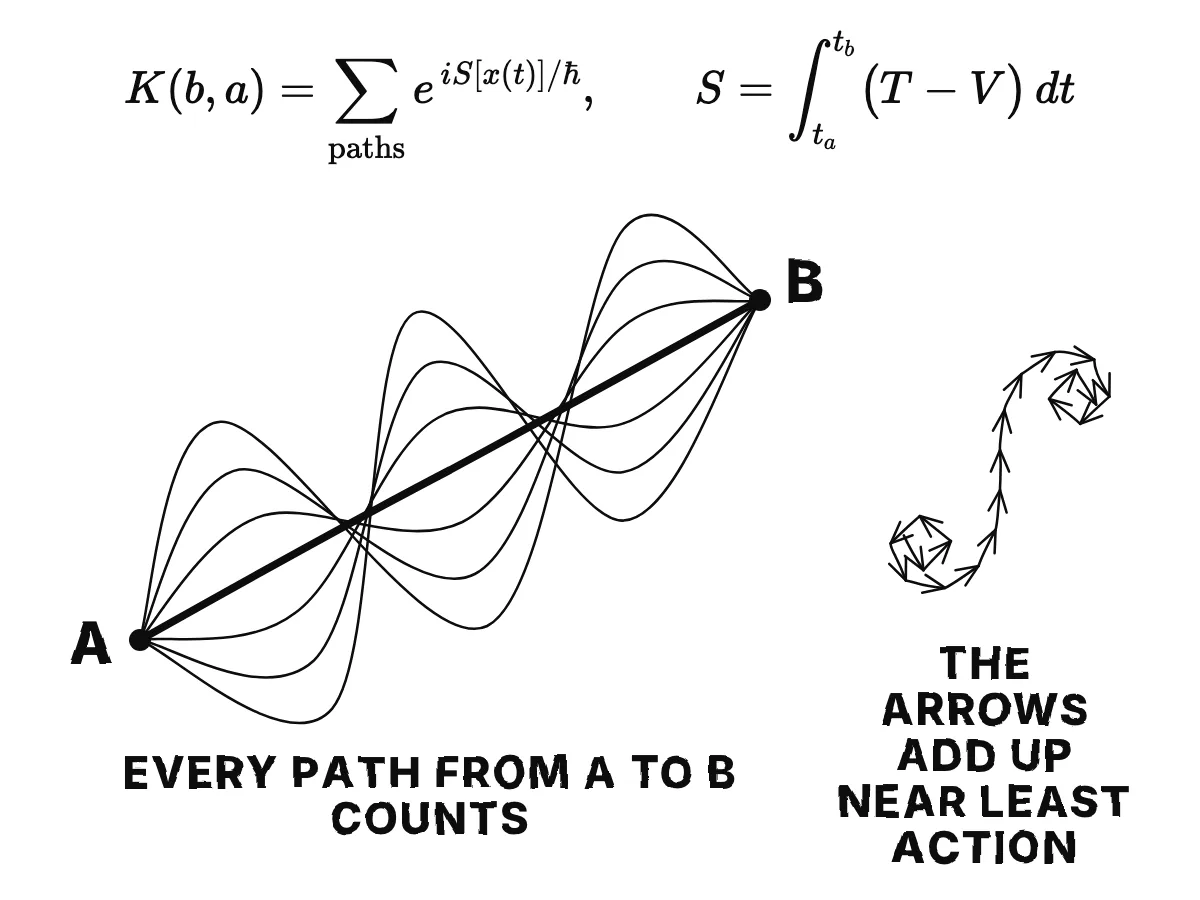
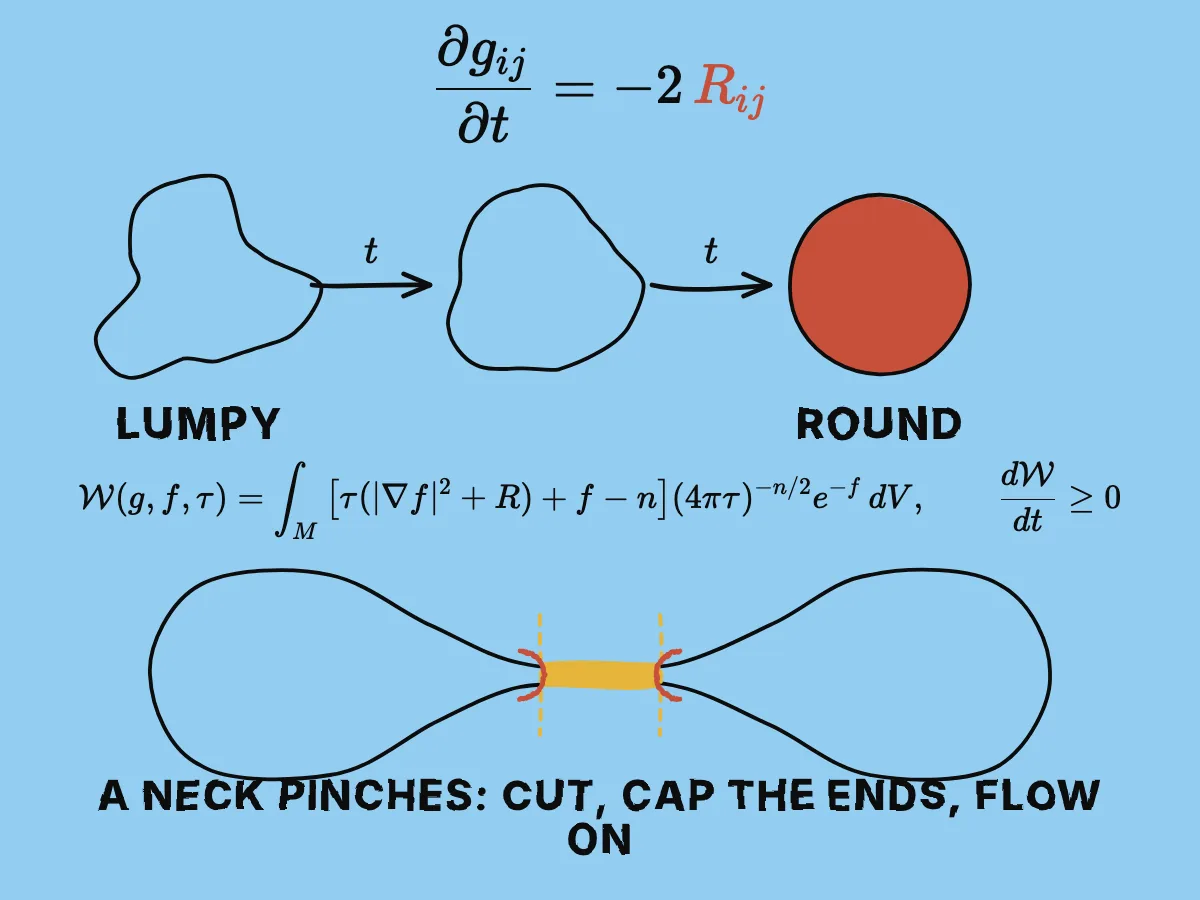
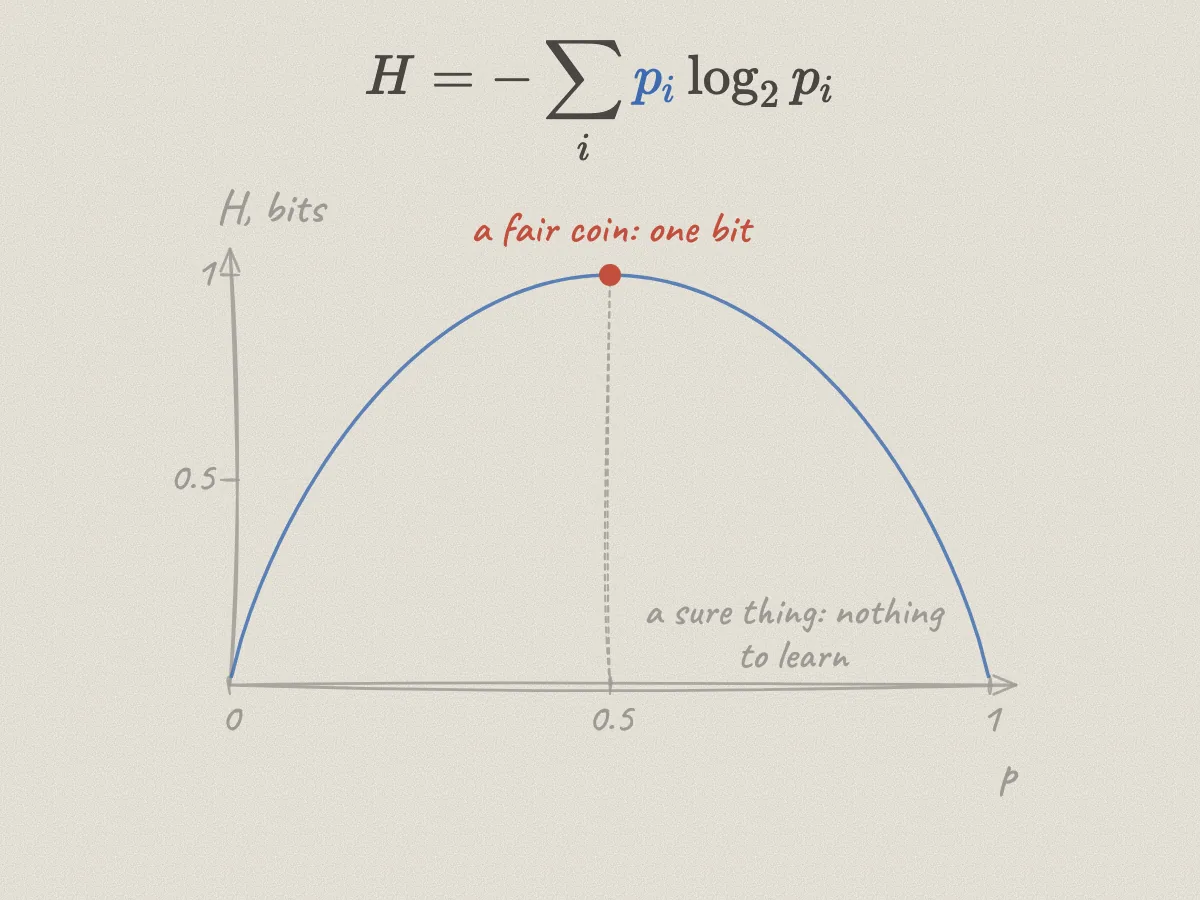
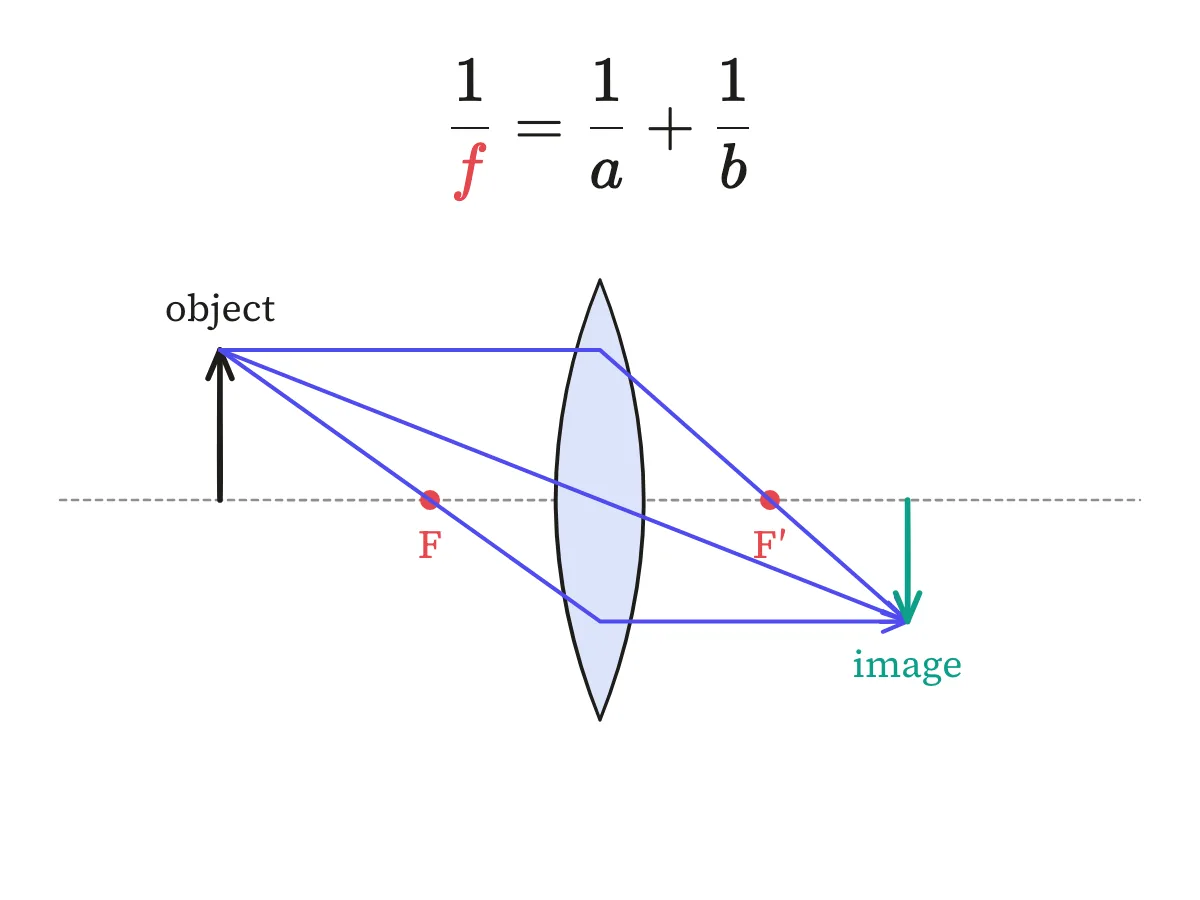
Voz, desenhos e texto em qualquer combinação. Mude quando quiser.
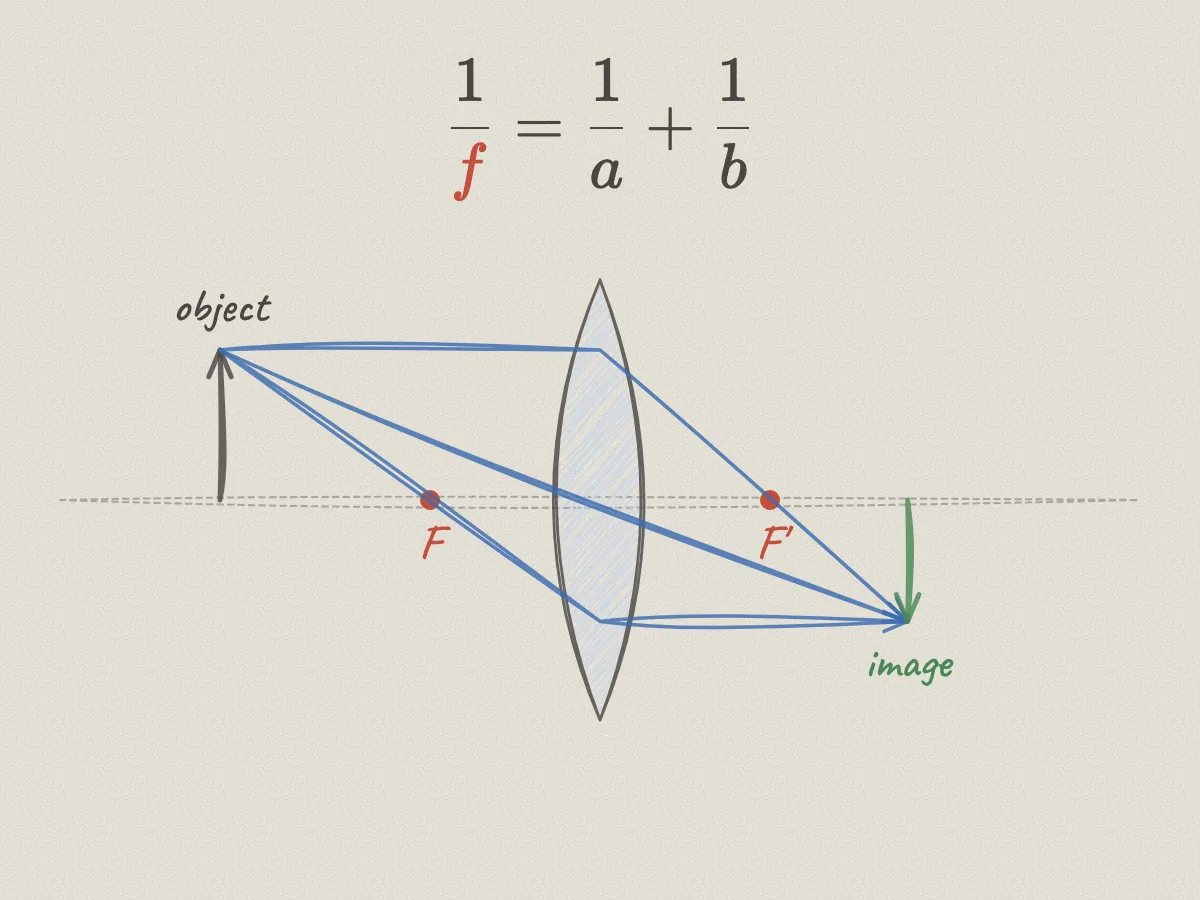
The first thing to know about a lens is how hard it bends light. Hold a magnifying glass in the sun: the rays arrive side by side, leave it leaning towards one another, and a little way behind the glass they meet in a bright dot. The distance from the glass to that dot is the focal length, and nearly everything else about the lens follows from it.
A lens is stronger when its glass is denser and its surfaces are more curved. Take ordinary glass, in which light travels one and a half times slower than in air, and curve both sides like a ball twenty centimetres across. Work it through and the focal length comes out at about ten centimetres: sunlight gathers into a point a palm's width behind the lens.
The book writes this as a formula, and we will come to it in a moment. It says no more than what we have just seen: denser glass or more curved surfaces, and the focal length gets shorter.
The distance from the glass to that dot is the focal length, and nearly everything else about the lens follows from it.
A lens is stronger when its glass is denser and its surfaces are more curved.
O desenho na página esquerda, o texto na direita e a frase em leitura bem destacada.
O desenho em cima e a frase atual por baixo. Ou apenas a voz, durante um passeio.
Leve consigo: MP3, MP4, EPUB, FB2, PDF.
EPUB, FB2, PDF ou DjVu. As páginas digitalizadas são reconhecidas.
Nível, idioma, estilo de quem dá a aula, estilo dos desenhos, voz, os seus próprios exemplos.
As primeiras dez páginas, com voz e desenhos.
O livro inteiro ou as primeiras cem páginas. Veja o preço antes de gerar qualquer conteúdo.
A amostra é grátis. Depois, o preço depende da quantidade de texto recontado e do número de desenhos criados, e é apresentado antes de começar. Ouvir com a voz do seu dispositivo não tem custos; a narração de estúdio é um extra. Carregue o saldo e use-o livro a livro.
Carregar um livroManuais, livros de ciência e engenharia e qualquer obra exigente de não ficção: filosofia, economia, história. As fórmulas são bem-vindas.
EPUB, FB2, PDF, DjVu e texto simples. Os livros digitalizados passam por reconhecimento de texto.
As aulas podem ser em vários idiomas, e um livro num idioma pode ser explicado noutro.
Sim. Os seus ficheiros e aulas só são visíveis para si. Se quiser, pode partilhar uma aula através de uma ligação.
Cada livro é guardado como uma sessão. Volte quando quiser para alterar as definições, avançar no livro ou adicionar um formato para descarregar.
No primeiro nível, sim: o livro é lido tal como foi escrito. Nos outros níveis, é recontado por outras palavras, mantendo a ordem, as conclusões e os resultados.