Explicado a su nivel
Conserve todas las fórmulas, o ninguna. Usted elige la profundidad.
Suba un manual o cualquier libro difícil. Recíbalo explicado a su nivel, leído en voz alta y con un dibujo para cada idea.
Arrastre su libro aquí
EPUB, FB2, PDF, DjVu o TXT, hasta 200 MB
Su archivo se mantiene privado
La distancia focal f′ de un sistema es la distancia desde su plano principal posterior H′ hasta el foco posterior F′. Para una lente delgada en el aire, viene determinada por los radios de curvatura r₁, r₂ de sus superficies y el índice de refracción n del vidrio: 1/f′ = (n − 1)(1/r₁ − 1/r₂).
A lens is stronger when its glass is denser and its surfaces are more curved. Take ordinary glass, in which light travels one and a half times slower than in air, and curve both sides like a ball twenty centimetres across. Work it through and the focal length comes out at about ten centimetres: sunlight gathers into a point a palm's width behind the lens.
Conserve todas las fórmulas, o ninguna. Usted elige la profundidad.
Su dispositivo lee cada lección en voz alta, gratis. La frase que se está leyendo se resalta en el texto.
Los esquemas y gráficos se dibujan paso a paso, al ritmo de la voz.
Indique con qué trabaja y los ejemplos usarán sus herramientas, no las de otra persona.
The same hard book is a different problem for a student before an exam and for an engineer on a deadline. Pick yours.
The textbook the course is built on, at a level you can follow tonight.
See howThe reference book of your field, at the depth today’s task needs.
See howRead into the neighbouring field without losing a month to its textbook.
See howSee a hard chapter explained five ways before you explain it yourself.
See howThe great hard books you always meant to read, finally followed to the end.
See howEl mismo párrafo en cinco niveles. Antes de generar nada, elija un nivel con un párrafo de su propio libro.
Fórmulas expresadas en palabras, con un ejemplo resuelto.
Una lente tiene más potencia cuando su vidrio es más denso y sus superficies son más curvas. Tome un vidrio común, en el que la luz viaja una vez y media más despacio que en el aire, y curve ambos lados como una esfera de veinte centímetros de diámetro. Al hacer el cálculo, la distancia focal resulta ser de unos diez centímetros: la luz del sol se concentra en un punto a un palmo detrás de la lente.
Un párrafo de ejemplo. El suyo saldrá de su libro.
Add questions after each part, worked examples and a pointer back to the page. Each is optional. Try them here.
Question 1 of 3
You swap a lens for one of the same shape made of denser glass. What happens to the point where sunlight gathers?
Ordinary glass, in which light travels one and a half times slower than in air. Both sides are curved like a ball twenty centimetres across. How far behind the lens does sunlight gather?
The same glass, but now one side is flat and only the other is curved. Where does the light gather?
Chapter 2. The thin lens · pages 41–44
Starts at: «The focal length f′ of a system is the distance from its rear principal plane H′ to the rear focal point F′…»
Every part says which chapter and pages of your book it retells. Cite the book, not the retelling, and open the original where it matters.
An example. Yours are written from your own book, and a second model answers every question before you see it. Available in the player
Five hard passages, five styles, every drawing made by our stage. Pick one style and every scene of the book follows it.
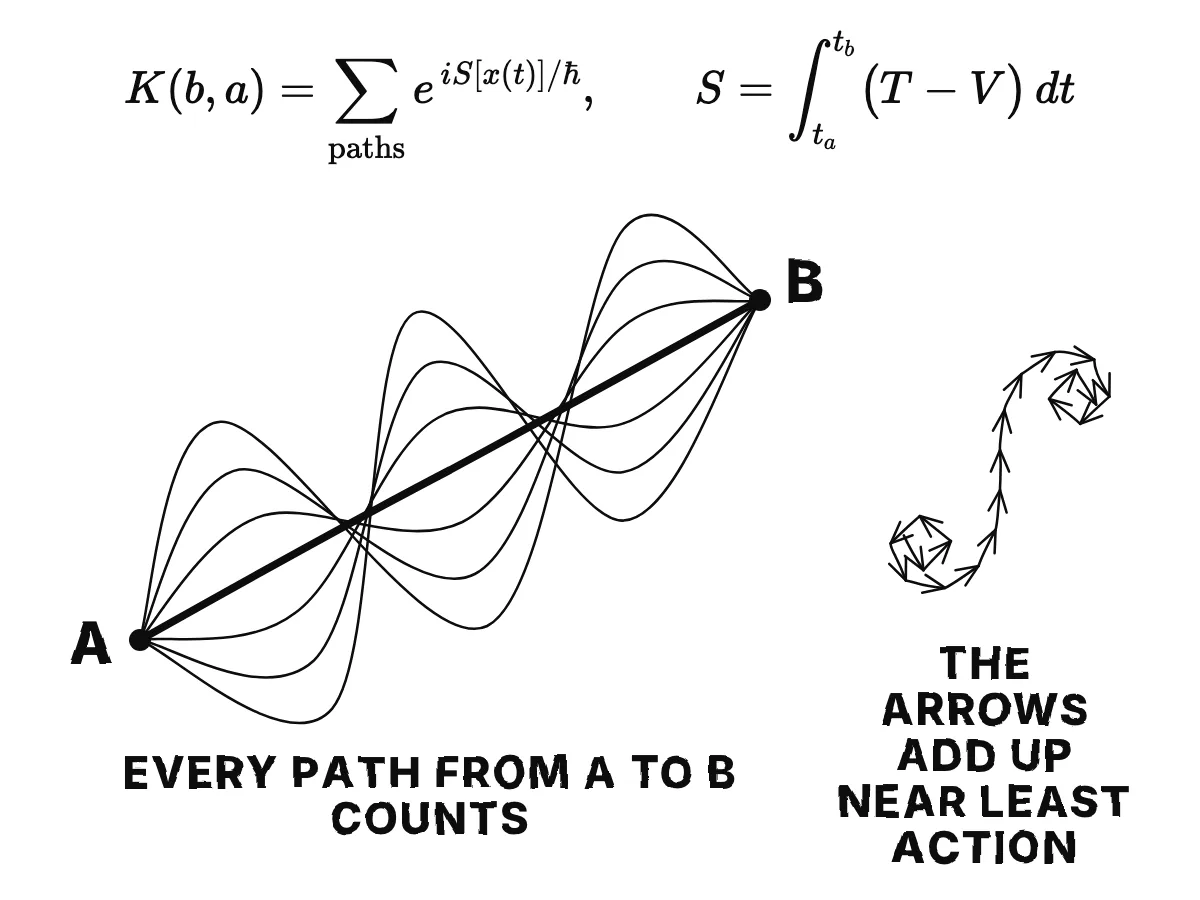
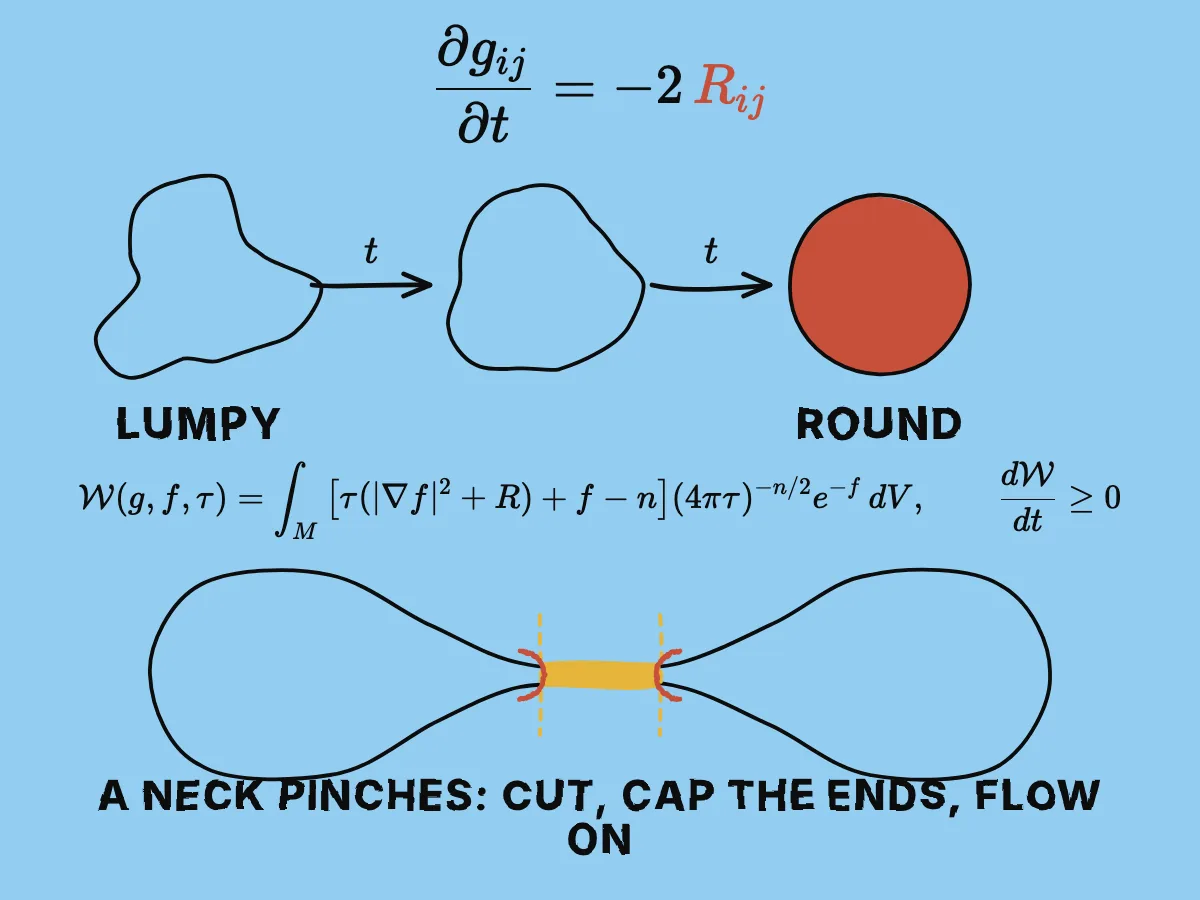
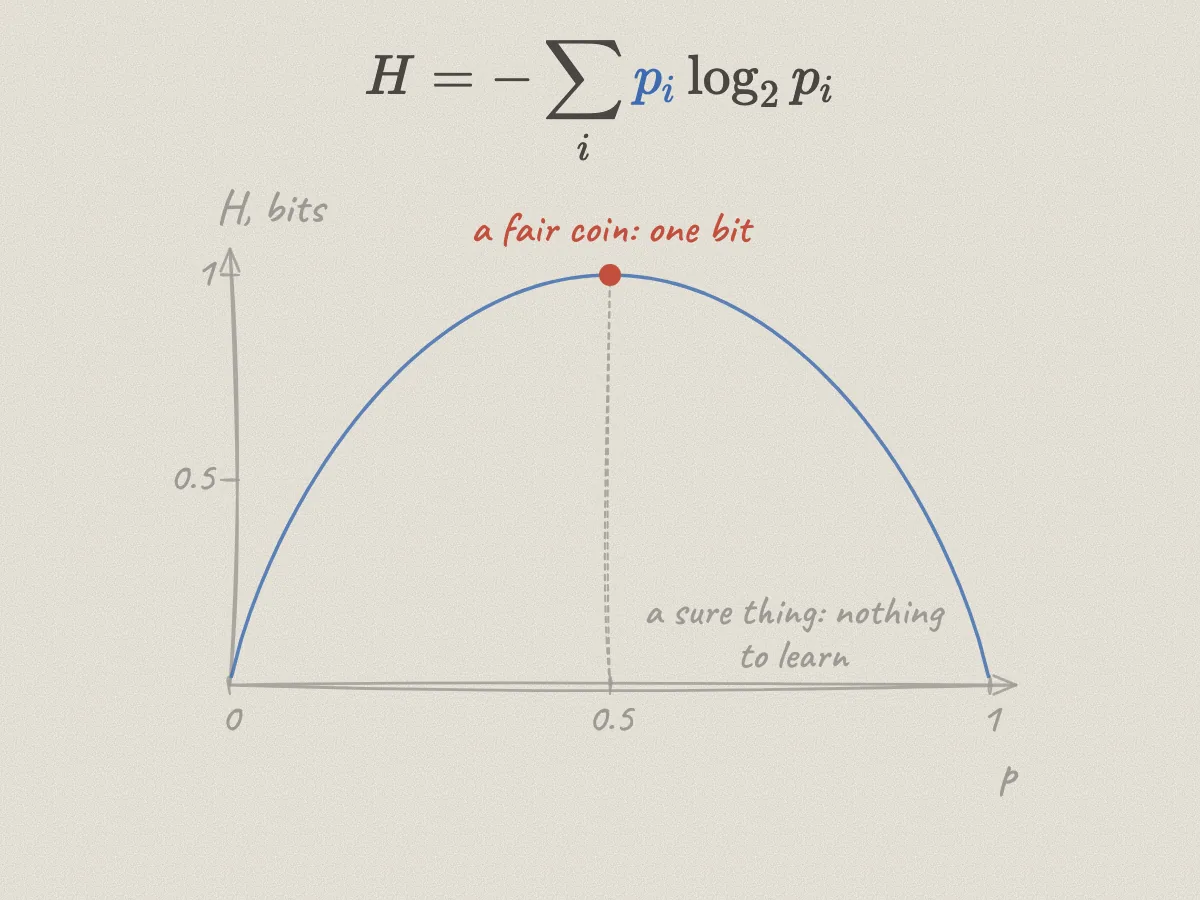
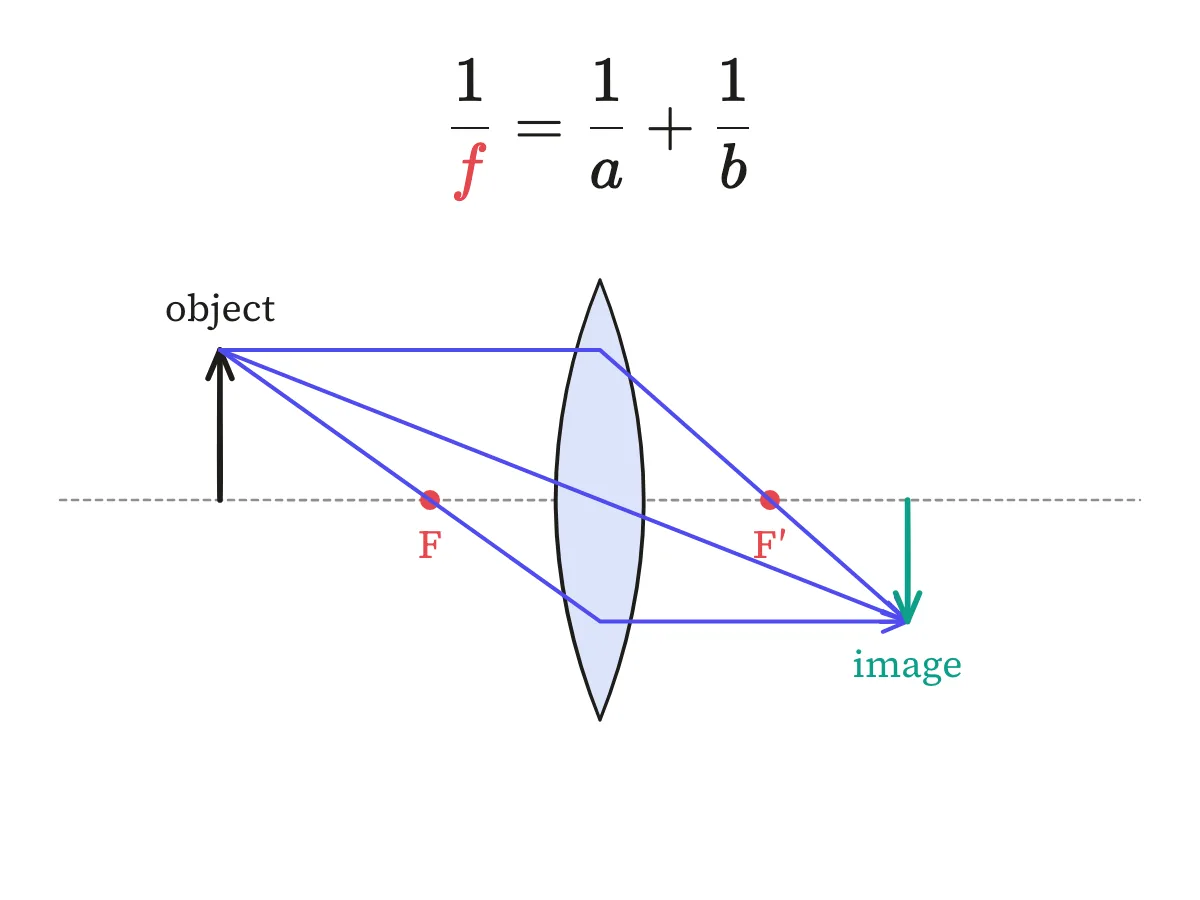
Voz, dibujos y texto en cualquier combinación. Cambie cuando quiera.
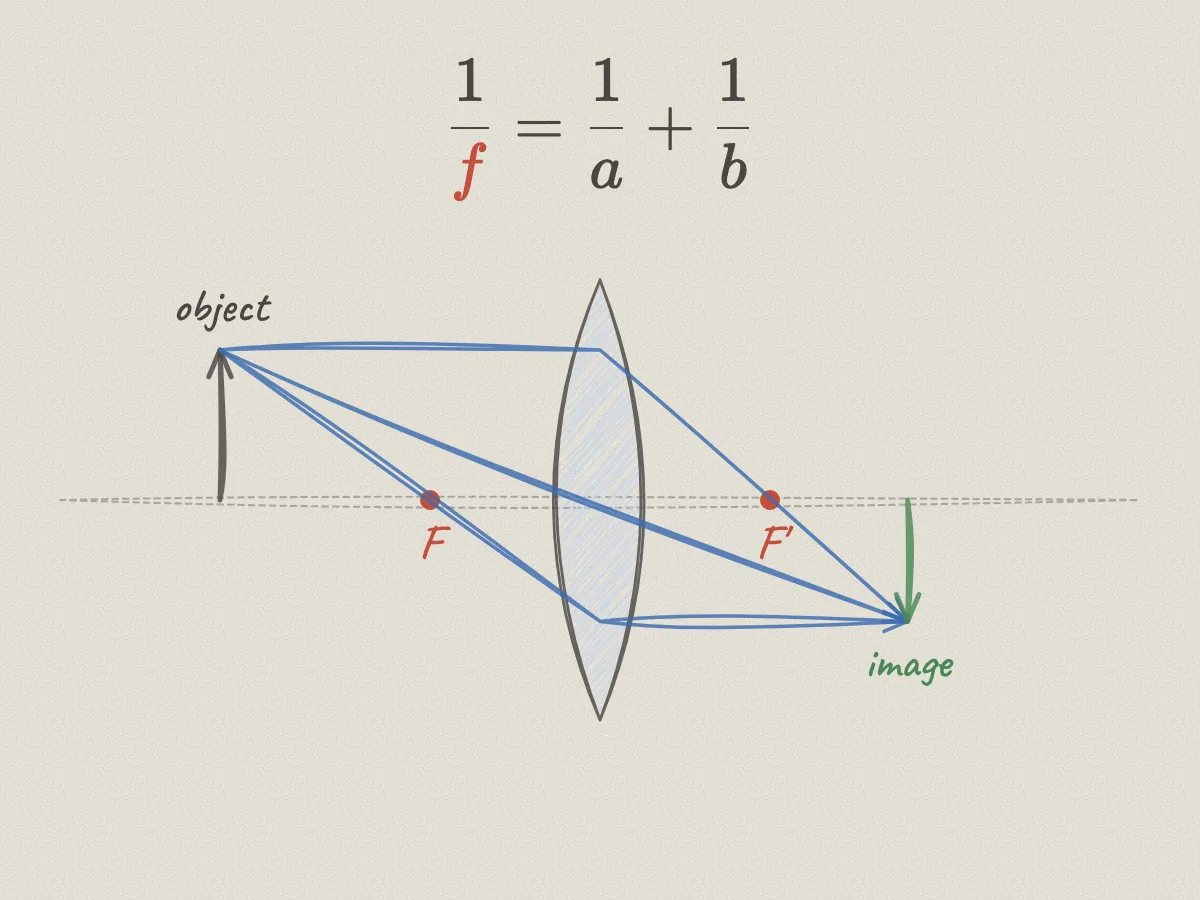
The first thing to know about a lens is how hard it bends light. Hold a magnifying glass in the sun: the rays arrive side by side, leave it leaning towards one another, and a little way behind the glass they meet in a bright dot. The distance from the glass to that dot is the focal length, and nearly everything else about the lens follows from it.
A lens is stronger when its glass is denser and its surfaces are more curved. Take ordinary glass, in which light travels one and a half times slower than in air, and curve both sides like a ball twenty centimetres across. Work it through and the focal length comes out at about ten centimetres: sunlight gathers into a point a palm's width behind the lens.
The book writes this as a formula, and we will come to it in a moment. It says no more than what we have just seen: denser glass or more curved surfaces, and the focal length gets shorter.
The distance from the glass to that dot is the focal length, and nearly everything else about the lens follows from it.
A lens is stronger when its glass is denser and its surfaces are more curved.
El dibujo en la página izquierda, el texto en la derecha y la frase que se está leyendo resaltada.
El dibujo arriba y la frase actual debajo. O solo la voz, mientras pasea.
Llévelo consigo: MP3, MP4, EPUB, FB2, PDF.
EPUB, FB2, PDF o DjVu. Se reconoce el texto de las páginas escaneadas.
Nivel, idioma, estilo del docente, estilo de dibujo, voz y sus propios ejemplos.
Las primeras diez páginas, con voz y dibujos.
Todo el libro o las primeras cien páginas. Verá el precio antes de generar nada.
La muestra es gratis. Después, el precio depende de cuánto texto se adapte y cuántos dibujos se creen, y lo verá antes de empezar. Escuchar con la voz de su dispositivo no cuesta nada; la narración de estudio tiene un coste adicional. Recargue su saldo y úselo libro a libro.
Subir un libroManuales, libros de ciencia e ingeniería y cualquier obra exigente de no ficción: filosofía, economía, historia. Las fórmulas son bienvenidas.
EPUB, FB2, PDF, DjVu y texto sin formato. Los libros escaneados pasan por reconocimiento de texto.
Las lecciones pueden estar en muchos idiomas, y un libro en un idioma puede explicarse en otro.
Sí. Solo usted puede ver sus archivos y lecciones. Si lo desea, puede compartir una lección mediante un enlace.
Cada libro se guarda como una sesión. Vuelva cuando quiera para cambiar los ajustes, seguir avanzando en el libro o añadir un formato de descarga.
En el primer nivel, sí: el libro se lee tal como está escrito. En los demás niveles se explica con otras palabras, manteniendo el orden, las conclusiones y los resultados.